Power & Protection Provided by Worthy Music – Part 1
Blessed be the name of God; let us sing to his praise, yea, let us give thanks to his holy name, for he doth work righteousness forever. Alma 26:8
(The following is taken from a talk given by Russell Nelson at a fireside 4 May 2008)
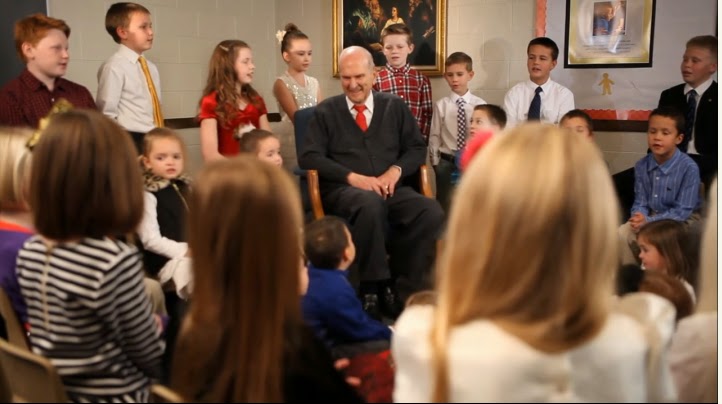
“Worthy music is powerful. It has power to make us humble, prayerful, and grateful.” says Russell Nelson. “Prophets through all generations have taught the importance of worthy music in our expressions of worship”
Citations from the scriptures teach us to ‘make a joyful noise unto the Lord . . make a loud noise, and rejoice, and sing praise’ (Psalm 98:4). “Contrast that spirit of enthusiasm with scenes we may see at church when some sing only passively and without a spirit of joy.”
“The Book of Mormon teaches that one’s desire to sing praises to the Lord comes with one’s complete conversion to Him (See Alma 5:26). Complete conversion is the key to our experiencing God’s greatest blessings.”
***********************************************************************
My Calling
Primary Music Leader
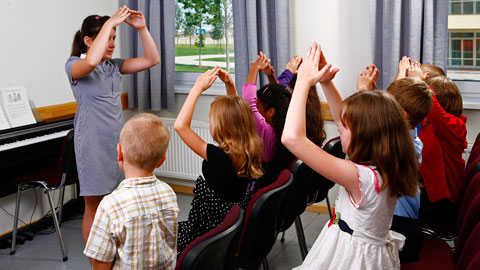
What an exciting time to be a Primary Music Leader! Teaching the gospel through music is powerful. One of the most important mottos any music leader can adopt is:
“Talk less. Sing more.”
Primary Music Leaders should never hesitate to write out, word-for-word, exactly what they want to say during their teaching time. Less leader-talk creates more time for children-music-making time. If you really wanted to challenge yourself, imagine there is a stopwatch that starts every time the children are not actively making music or doing something musical (i.e. when you are talking), and see if you can make it at short as possible.
In Primary, we mostly teach songs by rote (meaning by ear and not with sheet music). Children will learn a song best when they are asked to listen to the song about 3 times before they sing it. Make sure and give the children a job to do while listening (hand/body motions for phrases or when a particular word is sung is generally really effective). After they’ve listened carefully 3 times, let them try to sing it by themselves. Teaching by rote is a great opportunity to try singing without the piano.
A SINGING TIME LESSON PLAN
- Opening Song (2-5 minutes)
- Jr. primary likes the same song for a long time.
- Sr. primary needs a new one every 4-6 weeks or so
- Focus Song/Activity (5-10 minutes)
- learn something new
- For Fun (5 minutes)
- a seasonal song, action song, movement
- Review #1 (3-5 minutes)
- review a focus song from previous weeks
- For Fun (2-5 minutes)
- a seasonal song, action song, movement
- Tell A Story: A short story from the Friend that supports a review song
- Review #2 (3-5 minutes)
- review a focus song from previous weeks
- Closing (2+ minutes)
- A teacher-sing song (accompanied by guitar or a cappella)
- A guest instrumentalist to come in and play a favorite Primary Song
- Filler activity preferably with child-choice (“Fun to Do” or “When I’m Helping”)
TRANSITIONS
In between each activity you have a precious opportunity to transition from one activity to another. You can use transitions to engage the children by bearing testimony or telling a simple story. Here are some basic examples:
Teacher: “Each of you has parents on earth and parents in heaven.”
SING: “I Am A Child of God”
Teacher: “You lived with Heavenly Father before you were born.”
SING: “I Know My Father Lives”
Teacher: “Heavenly Father wants you to live with Him again”
SING: “I Will Follow God’s Plan for Me”.
Here is an example of story-telling transitions:
Teacher: “Once there was a little child who was born to a loving family.”
SING: “I Am A Child of God”
Teacher: ”This child learned about Heavenly Father and started to listen to the Holy Ghost.”
SING: ”I Know My Father Lives” etc . . .
Storytelling is also fun with fun/active songs:
Teacher: ”Once it was very, very cold.”
SING: ”Once There Was A Snowman”
Teacher: ”But the sun came out & the snowman melted. He made a beautiful stream!”
SING: ”Give Said the Little Stream”.
Elements to Include in Every Lesson:
1) Children Sing Without Adults
2) Child-Choice (children dictate something about the lesson: improv an action, choose a song, etc)
3) Large- and Small-Motor Movement (set up your room so that children have space to move!)
- make up a dance/steps to match the words/phrases (watch folk dancing for inspiration. Let the children help make these up if you can!)
- stomp the beat while singing
- Tap the words/rhythm then stomp the beat (use a sign or a puppet.)
- Make a circle, holding hands and move in a circle while singing. Switch directions.
For more suggestions and ideas, contact coalstakemusic@gmail.com
[Info shared by Bessie Rasmussen; Primary Music Leader, Kodály-inspired Music Educator]
************************************************************************
What’s New?
The music section of the handbook was updated a few weeks ago. All information and guidance can be found in section 19. Please read and study the updated guidance.

Some highlights are:
- 19.4.2 – The title “Ward Music Chairman” HAS BEEN RENAMED to “Ward Music Coordinator”.
- 19.4.3.2 – WARD ACCOMPANIST – If you were a “Ward Organist” you are now referred to as a “Ward Accompanist” and can help with ward choir & primary piano if needed (probably you’ve already been asked to help in this capacity).
- 19.2 HOME – “The hymns can help individuals gain courage and withstand temptation.”
- 19.3.1 PLANNING FOR CHURCH MEETINGS – ” . . . All music in Church meetings should be presented in the spirit of worship. . . Musical selections should be consistent with the worshipful spirit of the hymns. They should teach the gospel with power and clarity.”
- 19.3.2 MUSIC IN SACRAMENT MEETING – “Music coordinators and bishoprics try to find a balance between familiar and less-familiar hymns.”
- 19.3.3 MUSIC IN CLASSES – “Leaders encourage teachers to use the hymns and other sacred music to enhance their teaching.”
- 19.3.6 MUSICAL INSTRUMENTS – “Live instruments are normally used for prelude and postlude music and for hymn accompaniment in Church meetings. Where they are available and where members can play them, organs and pianos are the standard instruments. Bishoprics may approve the use of other instruments to accompany congregational singing, for prelude and postlude music, and in other musical selections.”
There is more information found in section 19. Please take time to learn and understand the incredible role of music and your calling, including those in Bishoprics.
************************************************************************
Up and Coming
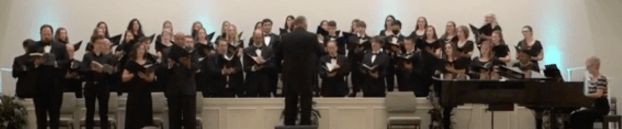
CHURCH CHOIR FESTIVAL – Opportunity to participate in a community choir event in conjunction with the University of North Georgia. Singers from our stake can participate by singing “This Is the Christ” as a group and then singing with other choirs from the community. Contact Rebekah Mildenhall by Jan 7th so we can meet the deadline for participating on Wed, Jan 12th. There will be rehearsals TBD for our choir representing our stake and church along with a required rehearsal with all the choirs on Sunday Feb 13th, 1:30 PM. The performance will be on Sunday Feb. 27th, 3 PM. Dr. Jack Broman, UNG Director of Choral Activities will lead the community choir. Please contact Rebekah Mildenhall. Rebekah.Mildenhall@ung.edu or coalstakemusic@gmail.com to participate.
Group repertoire:
- CHESTER – arranged by Lee Barrow
- MY SHEPHERD WILL SUPPLY MY NEED – arr. Mack Wilberg (HMC1424) with harp and flutes
- THE BATTLE HYMN – Peter J. Wilhousky (CM4743)
- “Christ We Do All Adore Thee” (from SEVEN LAST WORDS) – Theodore Dubois ( must be memorized for the Festival)
************************************************************************
Hymn Highlight
Sweet is the Work #147
This hymn was written by Isaac Watt’s and first published in his “Psalms of David” in 1719. It was titled “A Psalm for the Lord’s Day” and had 7 verses.
Born in 1674 in England, Isaac Watts was a precocious child–studying Latin at age 4 and composing well-written verses by age 7. It didn’t hurt that his father was a schoolmaster. At age 16 he moved to London to study as a minister becoming a pastor in 1702. He wrote over 800 published hymns as well as many other works. Some of these are found in our hymnbook today: Hymn #192 He Died! The Great Redeemer Died, Hymn #31 O God, Our Help in Ages Past, Hymn # 119 Come, We That Love the Lord.
See also the Women’s version and listen to President Nelson’s fireside where he references Watts hymns.
************************************************************************
Watch This
“I Will Walk With Jesus” from the new YouTube Channel for children from the church.
Also, you might enjoy this Piano Ensemble Recital from University of North Georgia UNG – Almost 40 minutes
 Coal Mountain Stake Music of The Church of Jesus Christ of Latter-Day Saints